
Board maintains flat tax shift for fiscal 2027, reports $600,000 winter reimbursement
The Select Board kept one tax rate for homes and businesses, estimated at $13.20 per $1,000, up from $12.69, and the town manager reported more than $600,000 in state aid for last winter’s snow and ice.

Cet article est en cours de traduction ; le voici en anglais.
The Select Board voted unanimously to keep one tax rate for homes and businesses in fiscal year 2027: it set the tax shift factor at 1, so residential owners and commercial, industrial and personal property (CIP) owners carry the same shares of the tax as in past years 29:26. The rate itself is estimated at $13.20 per $1,000 of value, up from $12.69 last year, pending certification by the Massachusetts Department of Revenue 20:54.
- Open public hearing for tax classification — Aye (motion: Audrey LaBrie) 14:39
- Close public hearing for tax classification — Aye (motion: Audrey LaBrie) 29:01
- Adopt residential tax shift factor of 1.000 and CIP factor of 1.000 for FY2027 — Aye (motion: Audrey LaBrie) 30:06
- Accept resignation of Renee Eldridge from Winchendon Commission on Disabilities — Aye (motion: Audrey LaBrie) 35:06
- Accept resignation of Ty Bischoff from Winchendon Youth Commission — Aye (motion: Audrey LaBrie) 36:19
- Approve 2027 Annual License Renewals — Aye (motion: Audrey LaBrie) 39:57
- Adjourn meeting — Aye (motion: Audrey LaBrie) 65:55
 The meeting in a minuteVideo brief · 1:10Watch
More briefs →Assessor Robert Heckman Jr. presented the tax classification hearing, noting that the proposed tax levy limit for fiscal year 2027 is $18,280,000, a 3.43% increase from the previous year 17:34. Heckman explained that while new growth revenue reached $239,218—significantly higher than the typical $70,000 to $80,000—the town’s valuation is 91.372% residential, making a split tax rate impractical without risking business loss 19:01.
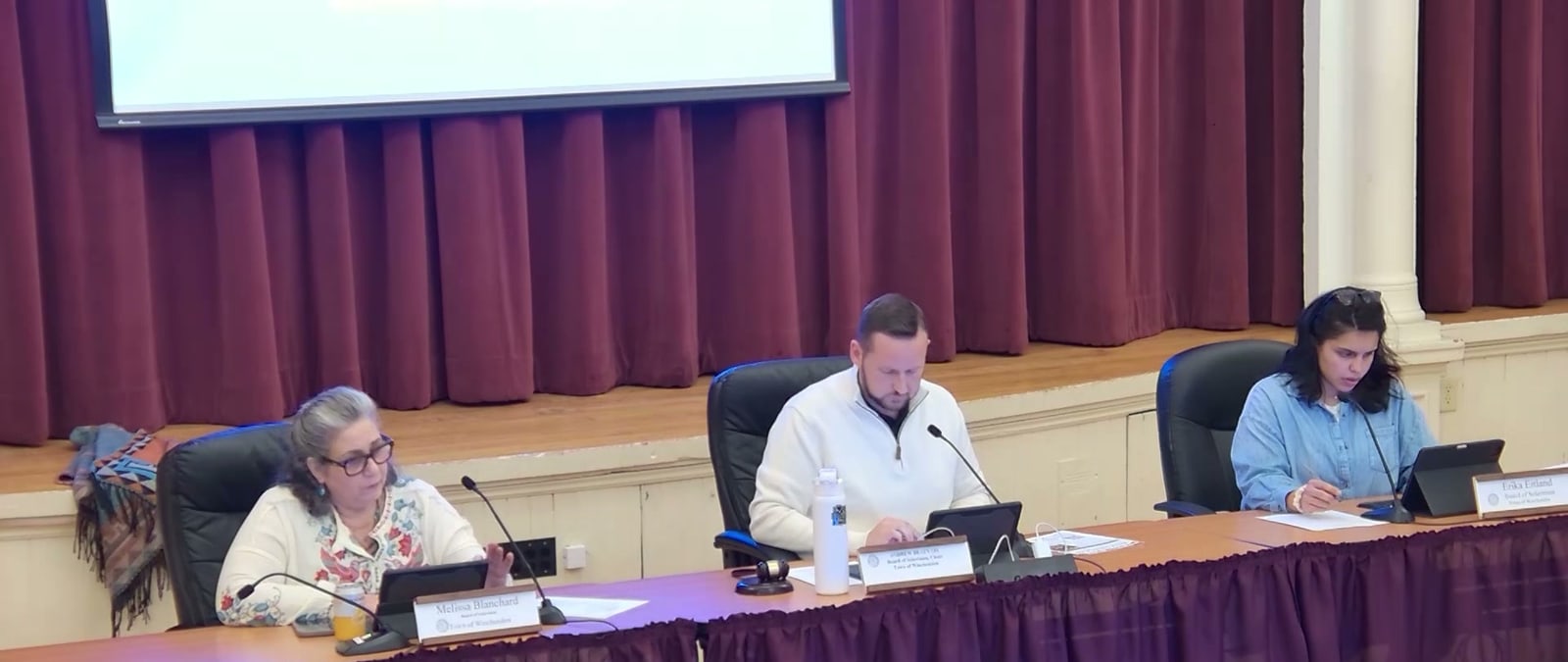
Member Erika Eitland asked why the commercial, industrial and personal property (CIP) rate could not be set somewhat higher than the residential rate 22:14. Heckman answered that split rates work in towns whose valuation is balanced somewhere around 60 to 80 percent between residential and CIP property, unlike Winchendon 22:24. Raising the CIP rate to $21 per $1,000 while the residential rate stays at $13.20 would mean significantly more money for businesses, and for farmers, whose chapter land would pay the higher rate too; in a small town, he said, that is when people start to leave 22:54. He cited Berlin, which has had split rates because part of the Solomon Pond Mall is in town, and Rowe, a town of about 1,500 with a very large paper mill 24:03.
Member Audrey LaBrie asked how this year’s $239,218 in new growth compares with past years and whether it comes from residential or business property 24:32. Heckman put typical new growth at around $70,000 to $80,000, and the town manager at about $80,000 24:54. Heckman said most of this year’s growth is residential, from new single-family homes, accessory dwelling units and use code changes, with some industrial growth off Spring Road or Route 140, and offered a breakdown of each new valuation 25:20.
LaBrie suggested the figures would help the town’s economic development group see where growth is coming from 26:03, and Eitland asked Heckman to share them with Deb Dennis so the group can discuss them at its next meeting 26:21. Heckman agreed, and pointed members to the LA-13 form in the state’s DLS Gateway, which lists every piece of new growth the Department of Revenue has approved 26:30.
During the hearing, a resident asked for clarification on the discrepancy between the average value increase of 3.79% and the average tax increase of 7.96% 28:06. Heckman explained that the tax increase is affected by the entire levy, not just single-family residences 28:17. His figures put the average single-family valuation at $386,060, with an average tax bill of $5,095.99 20:06.
During public comment, Amaya Mercado, vice chair of the Youth Council, reported that the group is awaiting a $2,000 grant for a current project and plans to post flyers at schools and online once planning is complete 30:54. Mercado said the council has made a survey for Winchendon youth that it will post soon, and is taking new members; anyone interested can find the email of the council’s chair, Maddie, on the town website 31:10. Asked by LaBrie what the project is, Mercado said any extra money the council has will go to funding applications from youth clubs and projects in town 31:52. Eitland, who serves on the Economic Development Task Force, said the Fire Station Committee would welcome help from high school juniors and seniors who want to build their communication skills, and is looking for people who have been helped by the fire station to share their stories 32:30.
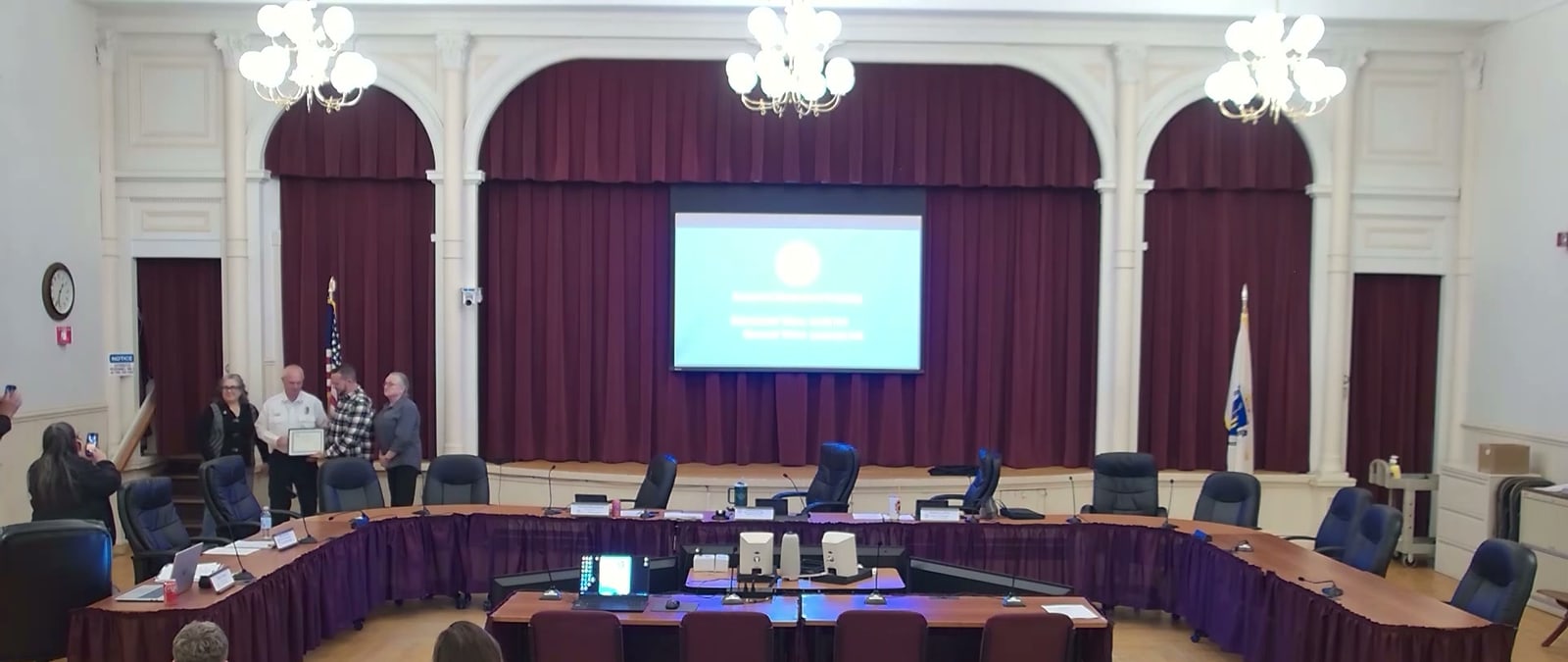
The board accepted the resignation of Renee Eldridge from the Winchendon Commission on Disabilities, effective November 5, 2026 34:48. They also accepted the resignation of Ty Bischoff from the Winchendon Youth Commission 36:10.
The board approved 2027 annual license renewals for several businesses, including Matthew Ford Sales, School Street Auto Sales and Repair, and J.D. Custom and Collision, Inc. 38:49.
In the Town Manager’s report, the manager highlighted that the town received approximately $269,000 from the state’s formula-based allocation for severe winter costs and was awarded $356,000 from a competitive state fund, bringing total winter reimbursement to over $600,000 against costs of about $730,000 43:43. The manager thanked DPW Director Pat Wood for securing the competitive funding 43:59.
The manager also reported that the town is working on closing the books for fiscal year 2026, with a goal of completion by the end of January 44:30. Additionally, the Department of Fish and Game is planning a boat launch ramp project at Ingleside Park, expected to be a calendar year 2027 project 42:00.
The board also discussed the purchasing policy (Article 12), noting that it is pending counsel review and will be brought back for further discussion at a future meeting 48:01.
In a second round of public comment, a resident asked for an update on the landfill, which had been expected at this meeting 48:22. The town manager said the presenters have been invited to the December 14 meeting; a board member explained that it was put off because this was Thanksgiving week, so that everyone who wants to attend can 48:58.
In her closing member comment, Eitland, joined by DPW Director Pat Wood, addressed residents’ surprise at their water bills after meter replacements 49:50. About 250 meters with failing transmitters are still to be replaced, and a failing transmitter means an estimated bill that may differ from actual usage 55:38. The replacement is free to the homeowner 55:02. Homeowners who have not scheduled one face a fee of $75 or $100, which is credited back if the replacement is scheduled within 45 days of the bill date 58:40. Residents have 30 days to pay a bill but can pay part of it; unpaid balances carry 14% interest, and anyone with a usage bill over $500 will get a call from DPW 58:58.
Eitland and Wood presented slides to explain how water meters function, clarifying that the devices measure actual water usage in cubic feet rather than calculated estimates 51:37. Wood explained that transmitters attached to the meters allow staff to collect readings by driving by, eliminating the need for manual basement visits 52:20.
Wood stated that a batch of T2 sensors purchased approximately 20 years ago has a shelf life of about 10 years, with failures beginning to appear around 10 years ago 52:45. When a transmitter fails, the department cannot obtain a direct reading and must estimate consumption by averaging the previous three quarters 53:30.
Eitland noted that when these meters are eventually replaced, discrepancies may arise between the estimated bills and actual usage, which could be in the homeowner's favor 53:52. She added that water bills will indicate whether the reading is actual or estimated, and the Department of Public Works can include a comment on the bill directing residents to call the office 54:16.
Eitland said she raised the matter because residents had contacted her upset about their bills, and she did not want the shock to spoil anyone’s holidays; she called it a last-ditch effort to communicate better 60:39. Asked by LaBrie what comes next, she said the aim is simply to get the information to residents, and the slides, which repeat what is already on the town website and in earlier letters, will be posted online once she fixes some typos 61:20.
LaBrie raised a concern that the board had never voted to approve the document as a town handout or for the website 62:17. Eitland answered that its content is the same as what is already public, and suggested the DPW director sign off on it because of the new format 62:44.
LaBrie closed the meeting’s comments by wishing everyone a happy Thanksgiving 64:03.
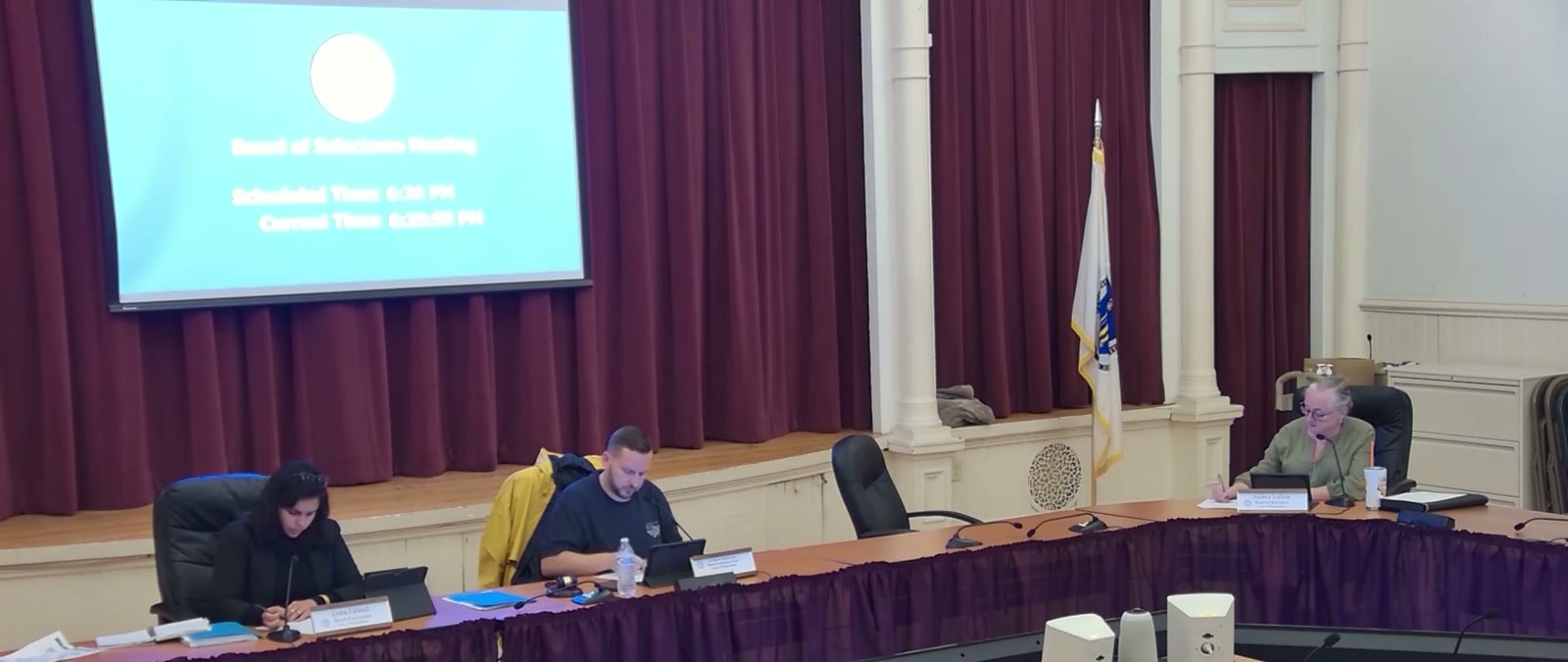
The next Select Board meeting is scheduled for December 14, 2026, at 6:30 p.m. 65:31.
- New growth revenue for the current year is $239,218, which is significantly higher than the typical $70,000 to $80,000 seen in previous years.
- Residential property accounts for 91.372% of the town's valuation, while commercial, industrial, and personal property account for 8.628%.
- The next Select Board meeting is scheduled for December 14, 2026, at 6:30 p.m.
- An update on the landfill is expected at the December 14 meeting.
- The town manager reported that the goal is to complete the closing of the FY26 books by the end of January.
A name wrong in this story? Tell us
A figure wrong in this story? Tell us
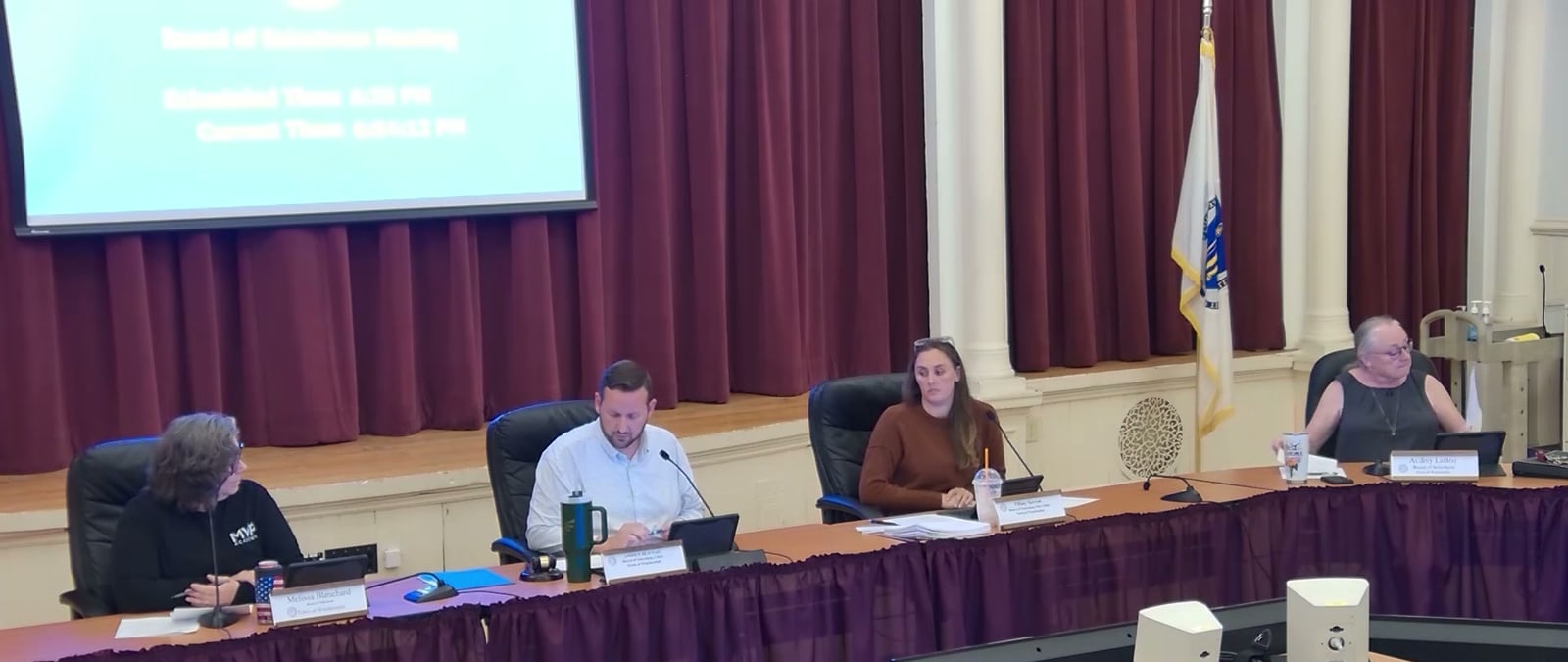
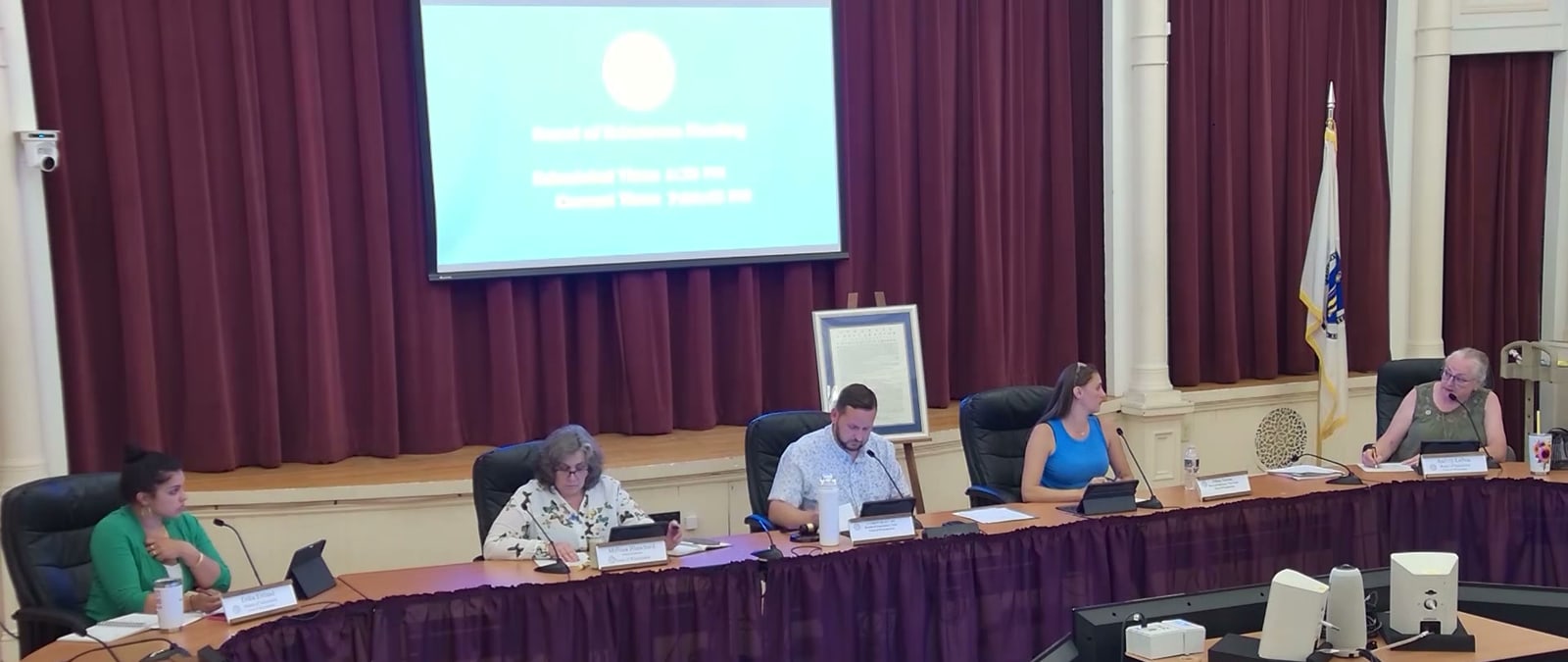
Know someone in the picture? Sign in to tell the editors — no password, a link by email.
Comments